
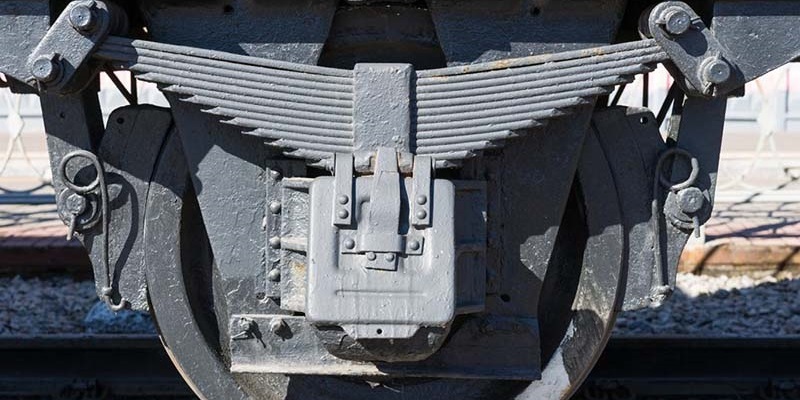
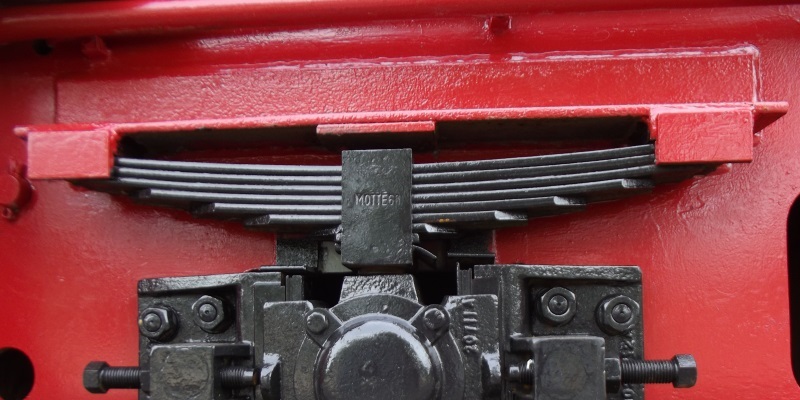
Railway Bogie Leaf Springs manufacturers :
We are Railway Bogie Leaf Springs manufacturers upto the following capacity :
- Flat Thickness : Upto 20 mm.
- Flat Width : Upto 250 mm.
- Total Length : As per Drawing / required
- Total Height : As per Drawing / required
- Raw material : Any Spring Steel grades according to load requirement & functionality
What is a Railway Bogie Leaf Springs ?
Railway Leaf Springs are fundamental components in the suspension systems of Rail vehicles, designed to absorb shocks and provide support to the weight of the Train while ensuring stability and comfort for passengers. This Leaf Springs are especially important given the substantial weight and forces exerted on Train carriages as they travel over various terrain and rail configurations.
The structure of Railway Leaf Springs typically features a multi-leaf configuration. This design not only enhances the ability to absorb impact forces but also provides a robust framework that can withstand varying load conditions during operation. Each leaf operates cooperatively, flexing and bending in response to stresses encountered on the track, thereby suspending the body of the train from its wheels.
Railway Bogie Leaf Springs specification :
Raw-material : The material composition of Railway Leaf Springs are equally significant. Typically, high-strength steel alloys are employed due to their superior performance in terms of fatigue resistance and load-bearing capacity. The choice of material affects the Spring’s longevity, stress resistance and overall functionality in harsh railway environments.
Dimension : It also plays a significant role in the specifications of Railway Leaf Springs; the width, length and thickness can affect not only their strength but also how they interact with other suspension components. Standard dimensions must align with the specific requirements set forth in various design standards.
Design : Additionally, the terrain over which the Railway vehicles operate can influence the design of Railway Leaf Springs. For example, Railways traversing rugged landscapes may require stiffer Springs to withstand harsh conditions, while those running on smoother tracks might benefit from more flexible designs.
Load capacity : Typically it’s varies depending on their design which is influenced by the total weight of the Rail vehicle they support. For instance, commuter Trains may require Railway Leaf Springs capable of handling loads of several tons, while freight locomotives necessitate even higher capacities due to the heavy cargo they transport.
Weight capacity : This refers to the maximum load a Railway Leaf Springs can safely support, is another critical specification. This metric is necessary to determine the Spring’s suitability for different types of Rail cars, such as freight or passenger models. Calculating the appropriate weight capacity ensures that the Springs can withstand the forces exerted during operation without risk of failure.
Railway Bogie Leaf Springs design :
Leaves : Railway Leaf Springs are typically composed of multiple layers or leaves, made from high-quality steel to ensure optimal strength and durability under varying load conditions. The number of leaves within a Spring is a critical design consideration; it influences the overall stiffness and load-carrying capacity of the component. A greater number of leaves generally results in increased strength and flexibility, allowing the railway vehicle to better absorb shocks from irregular track surfaces.
Curvature : The arching of the Bogie Leaf Springs, which refers to its curvature, plays a significant role in its performance. The design must ensure that the arch is sufficient to allow for sag under load, which is crucial in maintaining the vehicle’s stability while distributing weight effectively across the wheels.
Fatigue : As Railway Leaf Springs are subjected to numerous cycles of stress during their lifespan, engineers need to consider potential fatigue weaknesses in their materials. Advanced techniques, including simulations and testing, help in predicting these fatigue points, leading to more durable designs.
Railway Bogie Leaf Springs manufacturing process :
Raw-material selection : The journey begins with the selection of appropriate raw-materials, typically high-carbon steel or Spring steel, known for their durability and tensile strength. The selection process is crucial, as the wrong material can result in sub optimal Spring performance.
Forging : Forging of Railway Bogie Leaf Springs is conducted at high temperatures to enhance malleability, making it easier to shape the metal into the desired dimensions. The forging process usually utilizes dies that create multiple leaves in a single operation, ensuring consistency across the production batch.
Heat treatment : A vital stage that improves the micro structure of the steel. This process typically consists of heating the Railway Bogie Leaf Springs to a specified temperature and then quenching them in water or oil to achieve increased hardness.
Surface finishing : This procedures are employed to enhance the Railway Bogie Leaf Spring’s properties further. This involves processes such as shot-peening, which improves fatigue life and coating for corrosion resistance. These surface treatments not only ensure a longer lifespan but also protect the structural integrity of Springs in various environmental conditions.
Quality control : This is a critical phase in the manufacturing process. Each batch of Railway Bogie Leaf Springs undergoes rigorous testing to ensure conformity with industry standards. Tests may include tensile strength evaluations, fatigue testing and dimensional inspections.
How Railway Bogie Leaf Springs work :
When a Train moves along the tracks, it experiences various forces, including vertical loads from the weight of the Train and lateral forces due to track irregularities or turns. Railway Bogie Leaf Springs are engineered to distribute these forces evenly, ensuring that the weight of the rail vehicle is supported effectively.
When a load is applied, the Railway Bogie Leaf Springs compress, allowing controlled movement, which mitigates sudden jolts caused by bumps on the tracks. Under light loads, for example, the springs will deflect differently compared to heavy loads, allowing for adaptability across various operational scenarios.
Railway Bogie Leaf Springs necessity :
Railway Leaf Springs are designed to allows for optimal load distribution, which is crucial given the substantial weight of Rail vehicles. Properly designed Leaf Spring contributes to an efficient transfer of forces between the vehicle body and the track. This mechanical architecture ensures stability and control during transit, reducing wear and tear on both the rolling stock and the infrastructure.
Absence of Railway Leaf Springs in effective suspension systems, could result excessive vibration and oscillation that impact passenger comfort and travel safety. Such scenarios could escalate into more severe issues, including derailments, which pose risks not only to passengers but also to freight and the broader rail network.
Railway Leaf Springs enhance the overall performance of Rail vehicles by facilitating smooth traversals through diverse terrains and elevations. In modern Rail systems, where high speeds and heavy loads are a norm, the necessity of Leaf Spring technology becomes even more pronounced.