
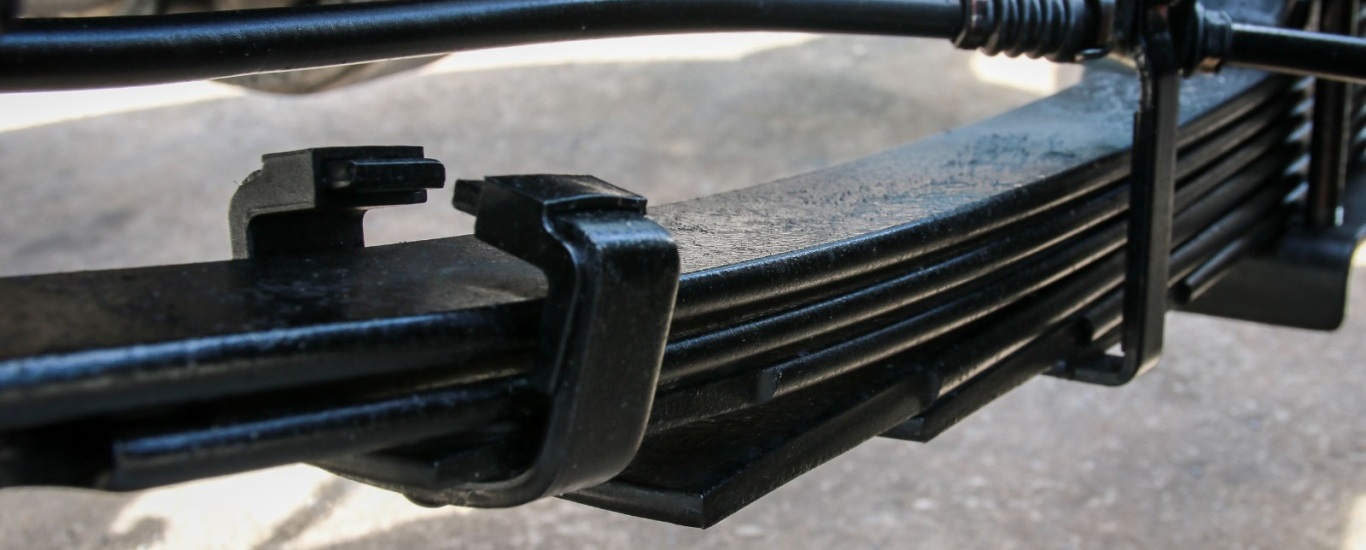
Leaf Springs
Leaf Springs definition :
A Leaf Springs are the type of Spring that is widely utilized in the suspension systems of various vehicles, particularly in trucks, SUVs, and trailers. It is composed of multiple layers of metal strips, commonly known as leaves, which are bound together either at the ends or through the entire length. This construction allows the Leaf Springs to flex, thereby effectively supporting the vehicle’s weight and absorbing shocks from uneven surfaces.
Leaf Springs suspension is a pivotal component of automotive systems, primarily designed to absorb shocks and maintain vehicle stability while supporting significant loads. This suspension system utilizes a series of curved strips of steel, known as Leaf Springs, which are arranged in an arc-like formation.
Leaf Springs types :
Multi Leaf Springs : It’s consist of multiple layers of steel leaves stacked on top of each other. The design allows for a greater ability to manage load and absorb shock, making them ideal for heavier vehicles like trucks and SUVs. Multi-Leaf Springs distribute weight more evenly across the entire Spring and provide excellent stability and durability. However, they can be heavier and may lead to a stiffer ride due to their construction.
Mono Leaf Springs : It’s utilize a single, wide leaf and are lighter than their multi-leaf counterparts. This design reduces weight and maintains the necessary flexibility required for various applications. Mono-Leaf Springs are commonly found in passenger vehicles, where a softer ride is preferred. Their streamlined design also aids in improved handling and performance.
Parabolic Leaf Springs : It’s consist of a single or a few leaves that taper at both ends, creating a more sophisticated construction. Parabolic Leaf Springs are known for their lightweight design and enhanced performance characteristics, including better load capacity and improved ride quality. They are commonly used in specialized vehicles, such as racing cars and performance trucks, due to their ability to absorb bumps and provide better handling.
Elliptical Leaf Springs : It’s design features a series of leaves or plates, arranged in an elliptical shape, which provides significant benefits when it comes to load distribution and vehicle handling. This innovative Leaf Springs design dates back to the early 20th century and it remains popular due to its efficient performance and superior strength.
Leaf Springs specification :
Dimension : Length, thickness and widths are the fundamental parameters that impact vehicle handling, ride comfort and load distribution. The length of the Leaf Springs affects its ability to flex under load, while thickness directly influences its tensile strength and stiffness. A thicker Spring tends to provide a higher load-bearing capacity, which is essential for supporting the vehicle’s weight effectively. Similarly, the width of the Leaf Springs can affect the mounting options and the overall geometry of the suspension system.
Design : The design of a Leaf Spring incorporates considerations such as the number of leaves, their thickness and the material used. More leaves can distribute load more effectively but may increase weight, while a carefully engineered configuration can enhance both strength and performance without unnecessary bulk. Another crucial parameter is the eye-to-eye length, which refers to the distance between the centers of Leaf Spring’s eyes or mounting points.
Spring rate : This is the another vital specification that denotes the amount of force needed to compress Leaf Springs by a specific distance. A higher Spring rate implies a stiffer Spring, which can improve handling and stability, particularly in performance applications. Conversely, a softer Spring rate may enhance ride quality by allowing greater flex and absorption of shocks.
Raw-material : Spring Steel such as BS970 group, 50Cr group, SAE 5160 etc., remains the dominant choice for Leaf Spring manufacturing. Its advantages include high strength-to-weight ratio, excellent durability and resistance to deformation under stress. Steel Leaf Springs can endure heavy loads and are generally less expensive compared to their composite counterparts.
Load capacity : This is also an essential consideration, determining how much weight Leaf Springs can support. Exceeding the rated load capacity can lead to premature wear or failure, affecting both safety and vehicle integrity. Lastly, the material from which Leaf Springs are constructed, typically Spring Steel or composite materials, influences fatigue resistance, weight and corrosion resistance, thus affecting the durability and performance of the Spring over time.
Leaf Springs function :
When a vehicle encounters uneven surfaces or obstacles, the Leaf Springs bend or deflect in response to the applied load, a process central to its operation. The deflection of Leaf Springs occurs due to the forces acting on the vehicle, which can vary depending on the weight, speed and road conditions. Each Leaf works together with the others to enhance the Spring’s capacity to absorb energy and reduce stress on the vehicle’s chassis.
In terms of weight distribution, Leaf Springs play an integral role in balancing the vehicle’s load. As weight is applied, typically from cargo or passengers, Leaf Springs distribute the force evenly across the axle. This helps to maintain the vehicle’s stability and steering control, particularly under heavy conditions. Leaf Springs support the chassis by connecting the axle to the vehicle frame. This connection is vital for the overall stability of the vehicle, allowing it to navigate diverse driving conditions while maintaining proper alignment and balance.
Leaf Springs diagram :
Leaves : In the Leaf Springs diagram, users will notice the arrangement of individual leaves, which are crucial for providing strength and support. The primary component of the Leaf Spring is the leaves themselves, which are flat, elongated pieces of metal that are stacked together in a specific arrangement to form entire Leaf Springs. Each Leaf in the assembly is usually tapered at the ends.
Eyelets : The eyelets are another critical element depicted in the Leaf Springs diagram. The eyelets are circular holes located at each end of the leaves and they facilitate the attachment of the Leaf Springs to the vehicle’s chassis. By providing a pivot point, the eyelets allow Leaf Springs to flex under load without losing structural integrity.
Hardware : The diagram also illustrates the mounting hardware that secures Leaf Springs to the vehicle. This hardware typically includes bolts, nuts and brackets that ensure the Leaf Springs remains firmly attached, contributing to the overall safety and functionality of the suspension system.
Leaf Springs manufacturing process :
Making design : Before starting the manufacturing process, proper design is mandatory. It begins with load calculations, which determine the amount of force that Leaf Springs need to withstand during operation. Accurately calculating the load is essential, as it directly influences the overall dimensions and configuration of the Spring. Understanding how weight distribution, acceleration and changes in terrain affect the performance of the suspension system is vital for creating effective Leaf Springs.
Forging : Forging serves as the primary method for shaping the Leaf Springs by manipulating metal into the desired profile. This technique is characterized by its ability to create parts with improved strength and structural integrity, especially under high-stress conditions, which is essential for automotive applications. Two key types of forging used in Leaf Springs manufacturing : hot forging and cold forging.
Heat treatment : This process enhances the mechanical properties of the Leaf Springs after manufacturing done, such as hardness and elasticity. Common methods include quenching, where Springs are rapidly cooled after heating and tempering. Proper heat treatment is essential in achieving the ideal balance between softness and hardness, ensuring that the final product can withstand the repetitive loads and impacts during operation.
Quality control : Before start Leaf Springs manufacturing, the raw materials are examined. Following material assessment, stress testing is conducted to simulates the operational conditions. By applying controlled loads to the Springs, Leaf Springs manufacturers can assess how well they withstand the stresses they will encounter in real-world applications. Furthermore, fatigue tests are integral to the quality assurance process.
Assembly : At this stage, Leaf Springs are manufactured by assembled in conjunction with other suspension elements such as shock absorbers, brackets and mounting hardware. This integration is crucial for ensuring that the entire system functions effectively, providing the necessary support and flexibility required for vehicle stability and comfort.
Surface treatment (Painting / Coating) : Once Leaf Springs are manufactured, common coating methods include painting, powder coating and galvanizing are done. Painting offers a basic level of protection and aesthetic appeal, while powder coating provides a thicker, more durable finish that is also environmentally friendly. Galvanizing, on the other hand, involves coating the Spring with zinc, which offers superior protection against rust and extends the lifespan of Leaf Springs considerably.
Final inspection : After completion of Leaf Springs manufacturing, it undergo a final inspection to ensure that all aesthetic and functional requirements are met. Once approved, Leaf Springs can be packaged for distribution, ready to be integrated into various automotive applications.
Leaf Springs advantages :
Heavy load capacity : One of the most notable benefits of Leaf Springs is their impressive load-carrying capacity. Due to their inherent design, which involves multiple layers, Leaf Springs can effectively distribute the weight of a vehicle, making them particularly suited for heavy-duty applications, such as trucks and commercial vehicles. This characteristic allows for improved stability and performance when transporting heavy loads, which is crucial in various industrial contexts.
Simple construction : Leaf Springs straight forward structure makes them easier to manufacture and install compared to more complex suspension systems. This simplicity translates to ease of maintenance, as fewer parts and less intricate designs can lead to quicker and less costly service repairs.
Structural integrity : Another significant advantage is the inherent ability of Leaf Springs to resist deformation. Unlike some suspension systems that may lose their shape or functionality with prolonged use, Leaf Springs maintain their structural integrity over extended periods.
Cost effective : The initial manufacturing costs of Leaf Springs are generally lower compared to other suspension systems, such as Coil Spring. In many applications, this lower cost does not compromise on performance, which is a significant factor for manufacturers and consumers alike.
Less prone to damage : Leaf Springs are less prone to damage than some other types of suspension systems, reducing the frequency and cost of repairs. This durability contributes to a lower total cost of ownership over time. When repairs are necessary, the parts involved are generally more accessible and less expensive to replace than the components of more complex suspension systems.
Long lasting : When properly installed and maintained, Leaf Springs can last for many years, often outpacing alternatives in terms of longevity. Their robust construction enables them to endure harsh conditions, making them favorable for commercial and off-road applications where durability is paramount.
Simplicity and ease of installation : The installation of Leaf Springs can often be accomplished with minimal specialized tools and equipment. As a result, many vehicle manufacturers opt for Leaf Springs in their constructions, knowing that this choice leads to shorter assembly times and reduced labor costs.
Easy repair & maintenance : In situations where repairs are necessary, Leaf Springs provide an advantage through their modularity. If one Leaf is damaged or worn, it can be replaced individually without requiring the entire assembly to be replaced. This modularity not only saves on repair expenses but also allows for quicker service, which is a significant consideration for vehicle owners who depend on their vehicles for daily use.
Customizability : Owners can modify Leaf Springs packs to suit specific performance needs, preferences or loading conditions. This process often involves adding or removing individual leaves from the Spring pack, which directly influences the overall stiffness and ride height of the vehicle.
Leaf Springs disadvantages :
Less riding comfort : One significant drawback is the ride comfort they provide. Leaf Springs design typically result in a stiffer suspension, which can lead to a harsher ride compared to modern alternatives like Coil Springs or air suspension systems. This rigidity is particularly evident on uneven roads where the vehicle may transmit more bumps and jolts to the occupants.
Negative vehicle’s cornering ability : Another notable limitation of Leaf Springs is their handling dynamics. Due to their structural configuration, Leaf Springs can negatively impact a vehicle’s cornering ability, especially under heavy load conditions. The tendency for the ends of the Spring to flex can compromise stable handling, leading to an unsettling experience when navigating sharp turns or abrupt maneuvers.
Limited flexibility and ride quality : When traveling on bumpy or uneven surfaces, the lack of flex in Leaf Springs can translate into a harsh driving experience. Unlike Coil Spring or other advanced suspension technologies, which can absorb shocks and adapt more readily to varying road conditions, Leaf Springs may struggle to dampen the effects of rough terrain.
Heavy weight and impact on performance : Leaf Springs are considerably heavier compared to alternative suspension systems. This added weight has significant implications for vehicle performance, particularly in terms of fuel efficiency, handling and overall dynamics. As vehicles are designed for optimal balance between performance and efficiency, the introduction of heavier components can disrupt this balance.
Potential for uneven tire wear : Leaf Springs consist of multiple layers of metal strips, which are stacked atop one another. This configuration has notable implications for suspension alignment and ultimately for the handling characteristics of the vehicle. When a vehicle equipped with Leaf Springs is subjected to load, the Spring can flex and cause changes in the alignment of the axle. This misalignment can occur particularly under heavy loads or with frequent cornering.
Vulnerability to corrosion and fracture : Leaf Springs are a commonly utilized component in suspension systems, particularly in heavy-duty vehicles. However, their construction, often involving layered steel, presents certain vulnerabilities, especially regarding corrosion and fracture. One of the significant risks associated with Leaf Springs are their susceptibility to rust, particularly in geographical regions where road salt is routinely used during winter months.
Diminished load capacity over time : Leaf Springs are not immune to wear and fatigue over time. A common and significant drawback of this Spring is their tendency to diminish in load capacity as they age, which can lead to performance issues for vehicles that depend on consistent payloads. As Leaf Springs are subjected to frequent stress from heavy loads, they may undergo a process known as fatigue.
Leaf Springs price factors :
Raw-material cost : The most common materials used are steel and composite materials. Steel Leaf Springs are tend to be more affordable due to their widespread availability and established manufacturing processes. Composite Leaf Springs, although often more expensive, as reduced weight and improved corrosion resistance.
Manufacturing cost : Higher manufacturing standards typically result in higher Leaf Spring’s cost due to the increased scrutiny and rigorous testing involved. For instance, Spring produced through advanced techniques like computer-aided design and automated production lines may command higher prices but often ensure better consistency and quality.
Brand value : Company reputation also plays a key role in Leaf spring’s pricing. Established manufacturers that have built a strong reputation for reliability and performance may charge a premium for their products. Customers often associate higher prices with better quality or customer service, leading them to perceive value in investing slightly more in a trusted brand.
Labor cost : This encompasses the wages paid to skilled workers during the production process as well as additional costs related to labor-intensive operations. Higher labor costs generally translate to increased product Leaf Spring’s pricing as manufacturers strive to maintain quality while compensating for skilled labor.
Production overhead cost : This includes expenditures related to facility maintenance, equipment operation and maintenance and overhead associated with administrative functions within the manufacturing plant. Manufacturers may allocate these costs based on the number of units produced, ultimately reflecting their influence on the Leaf Spring’s price.
Transportation cost : These expenses are incurred during the distribution of the finished Springs to retailers or direct customers. Factors influencing these added Leaf Spring costs may include distance from manufacturing facilities, shipping methods and fuel prices.